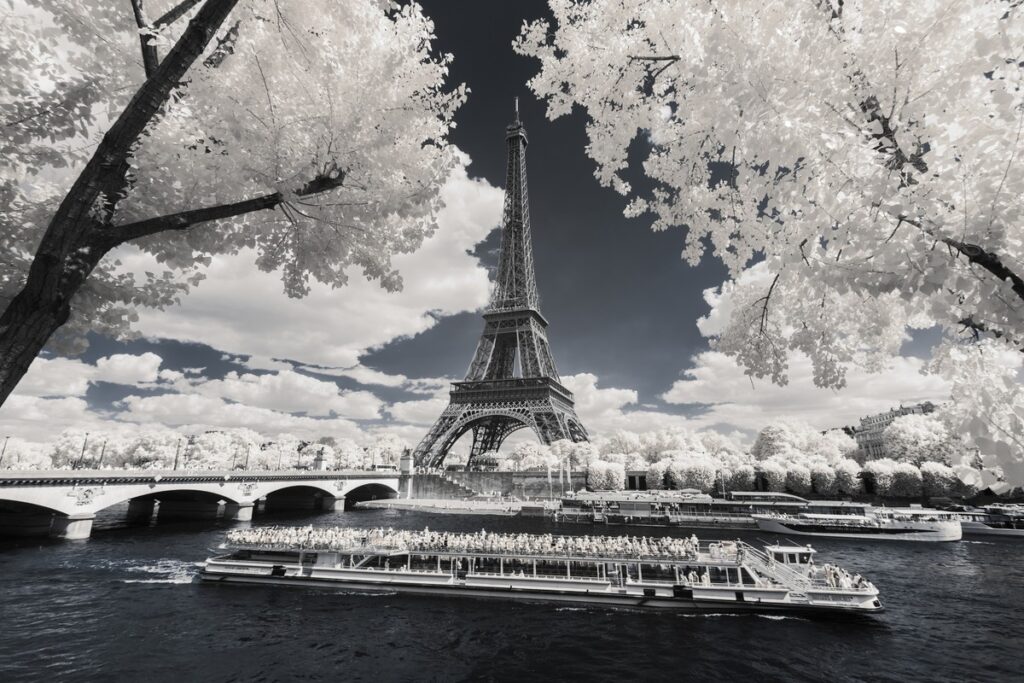
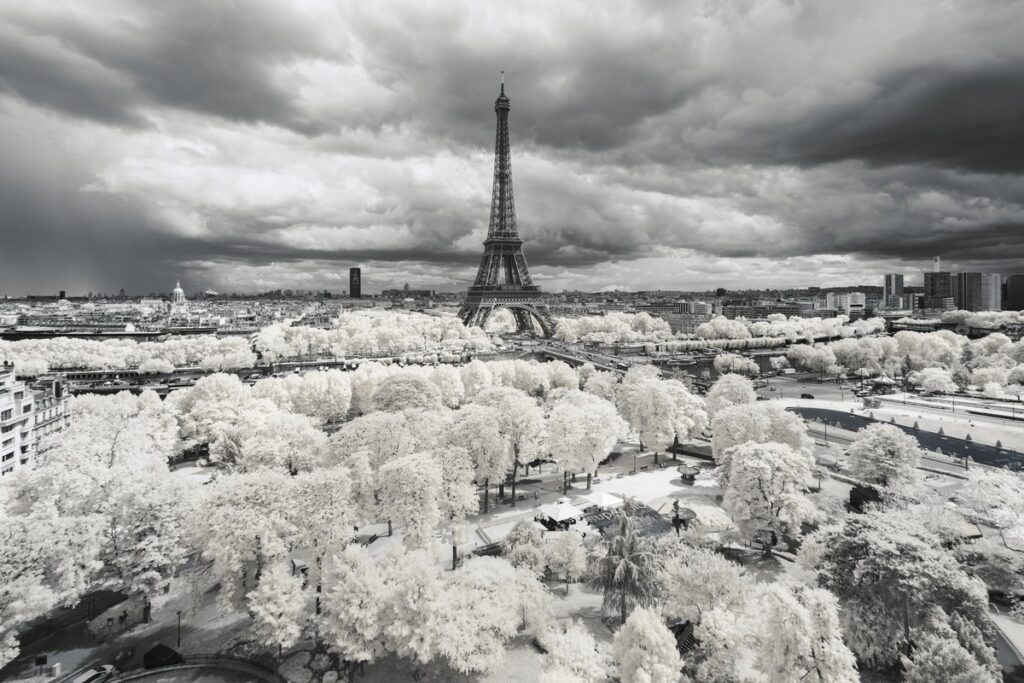
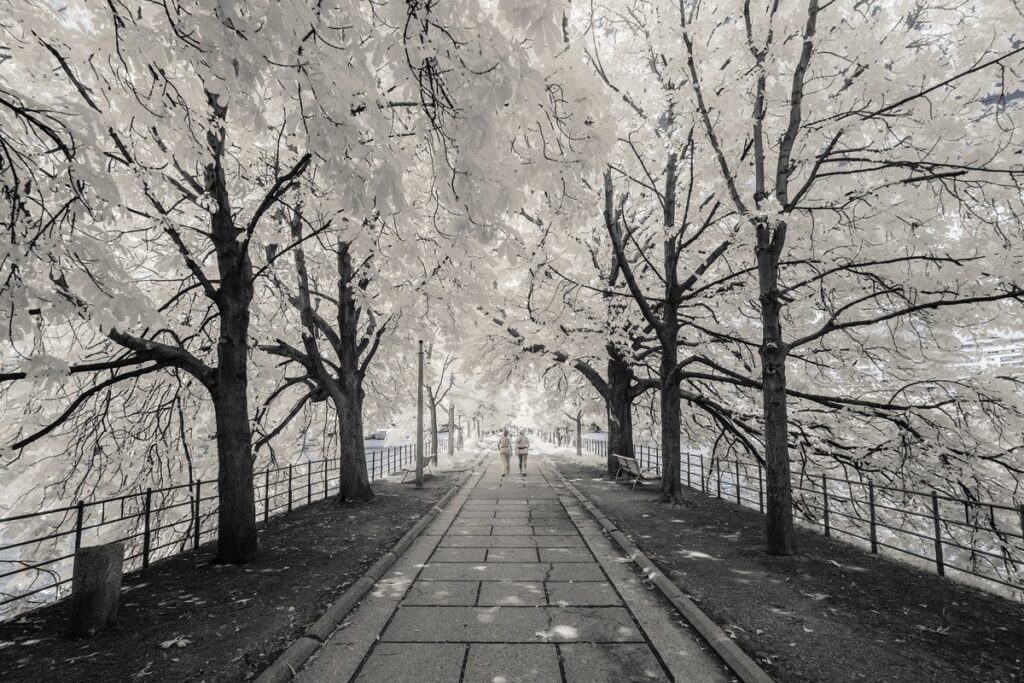
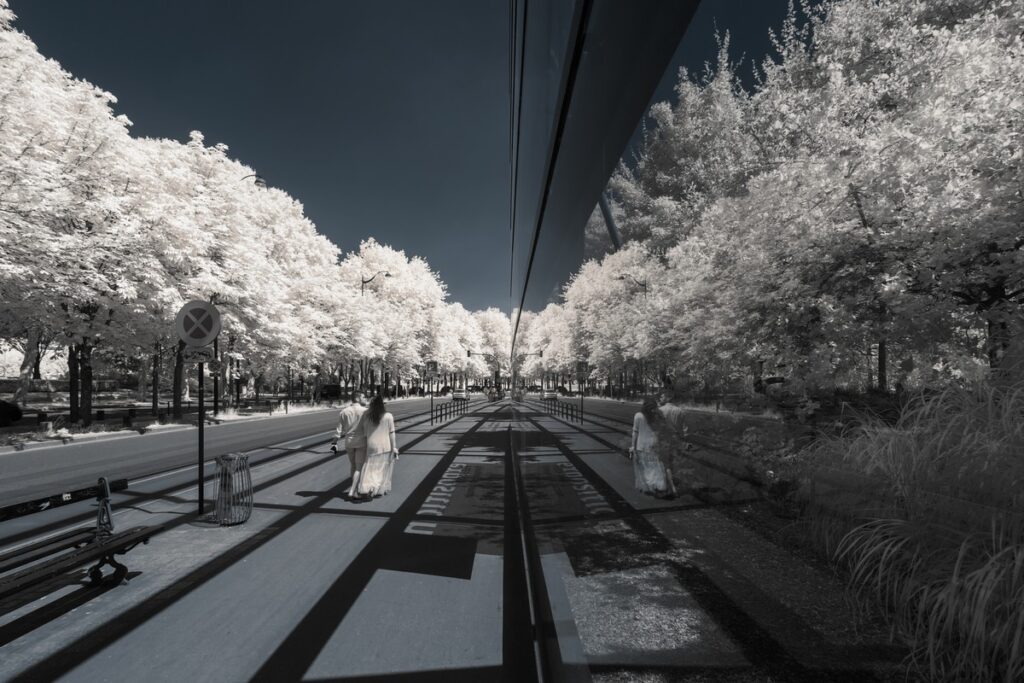
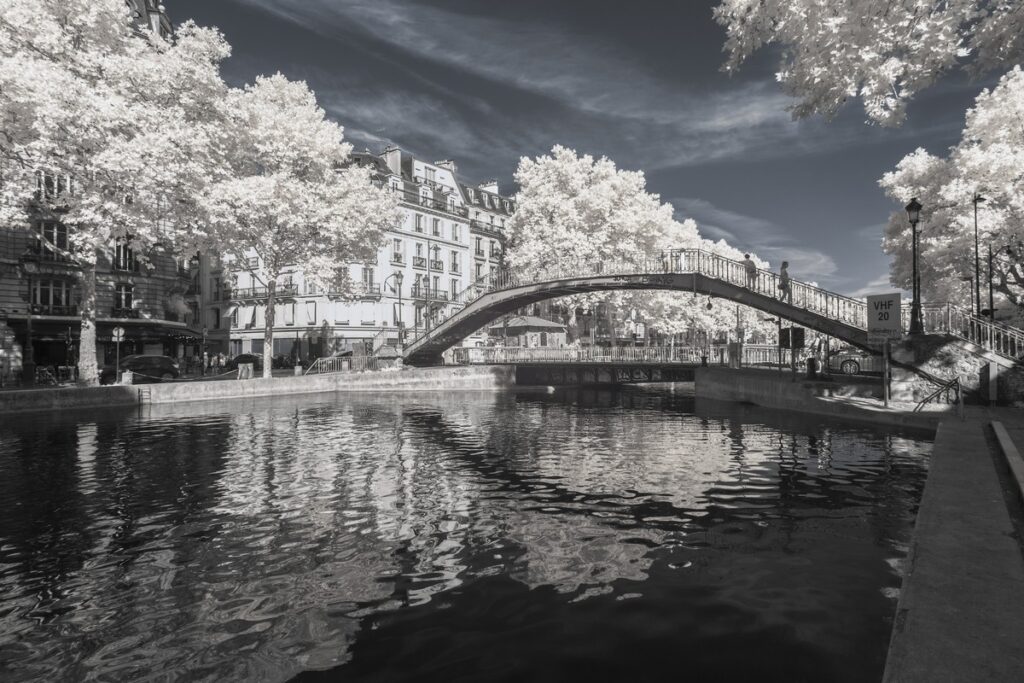
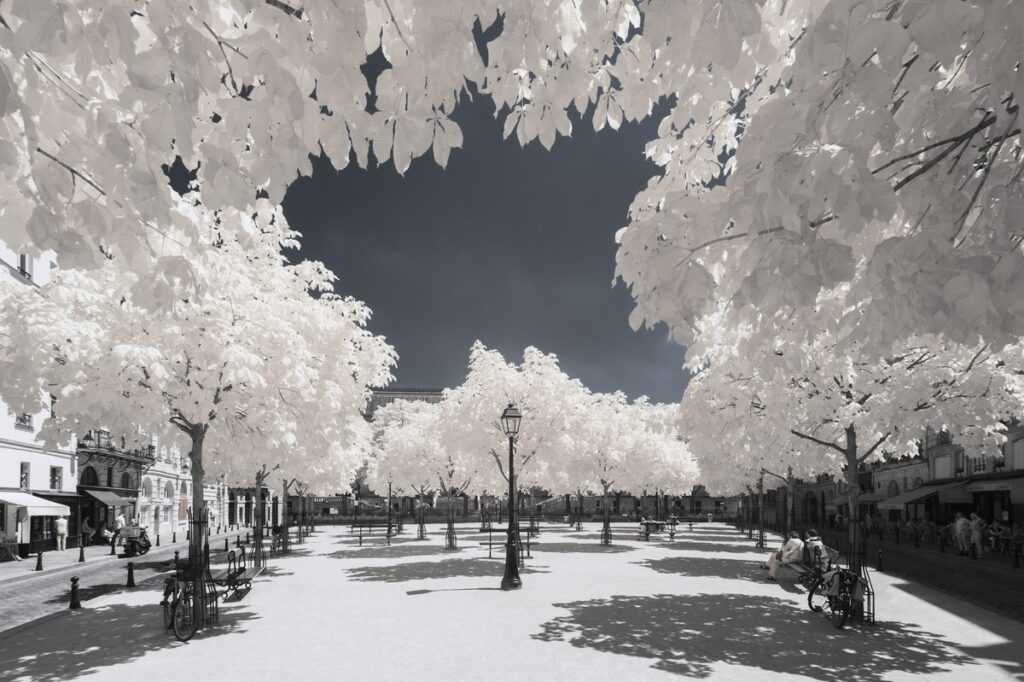
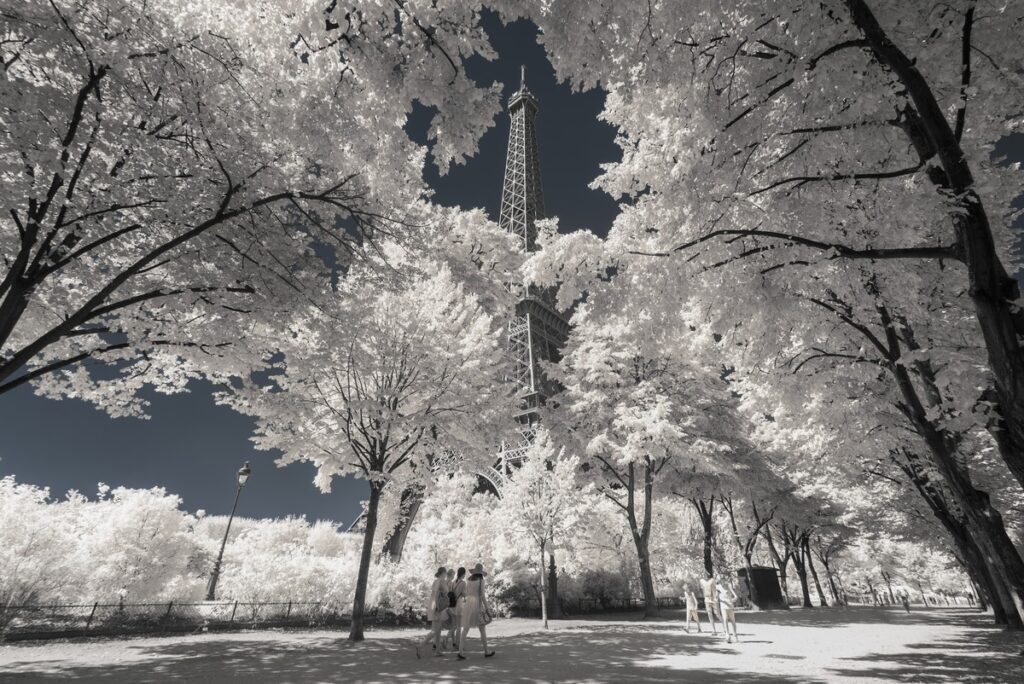
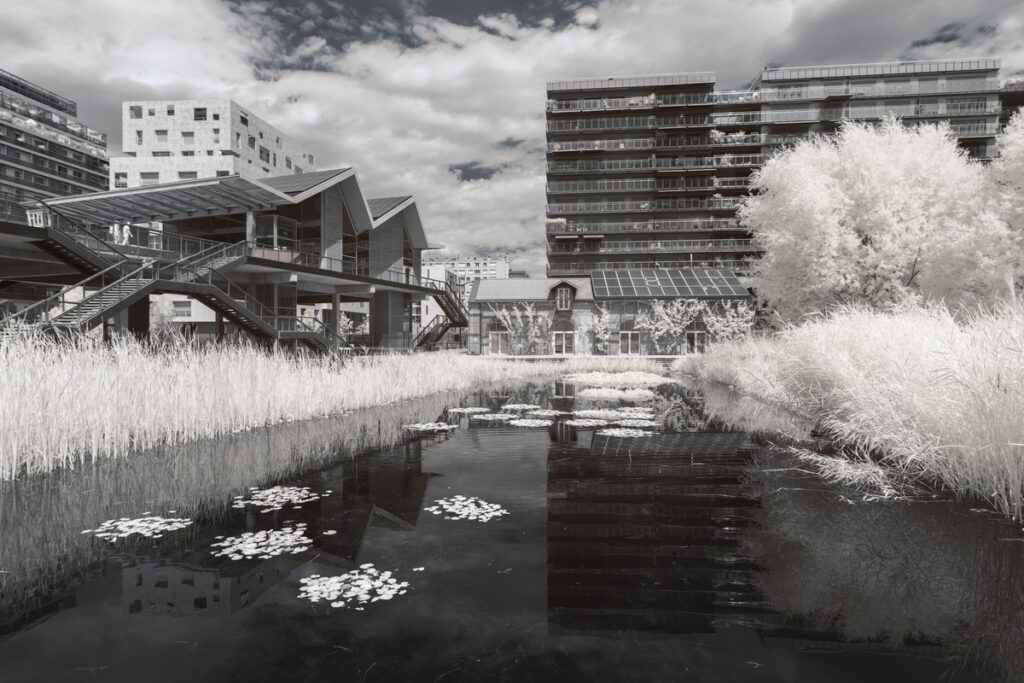
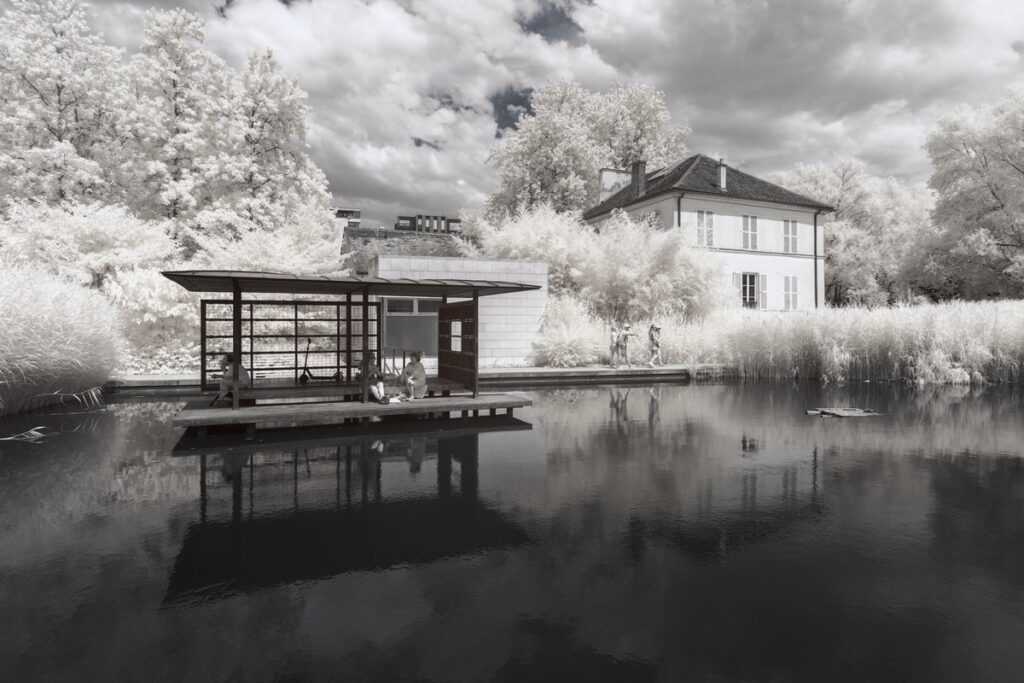
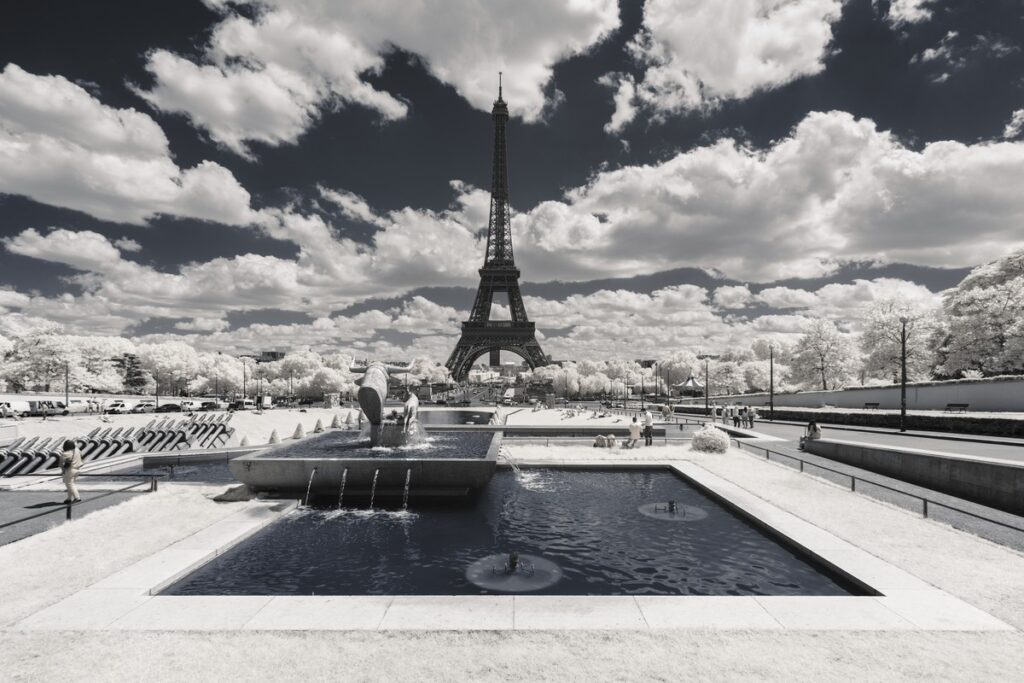
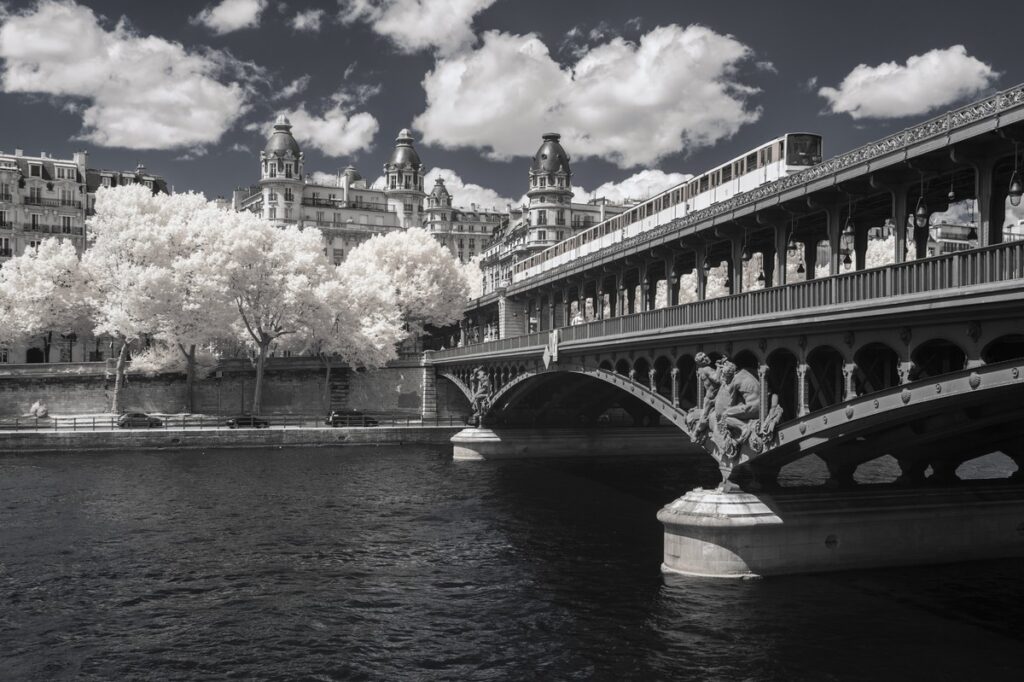
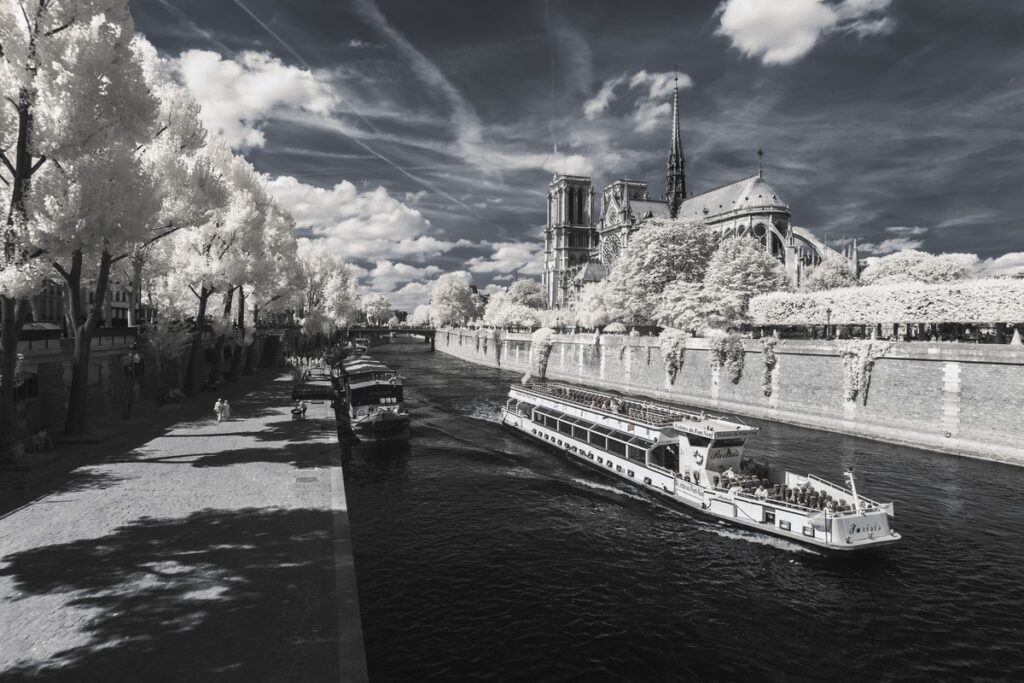
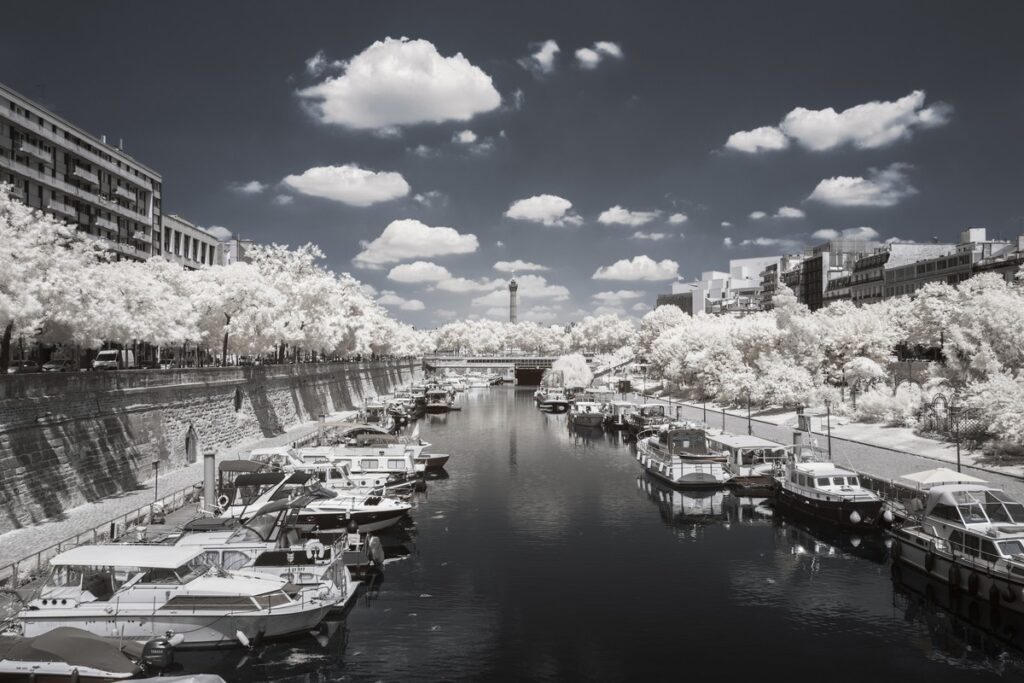
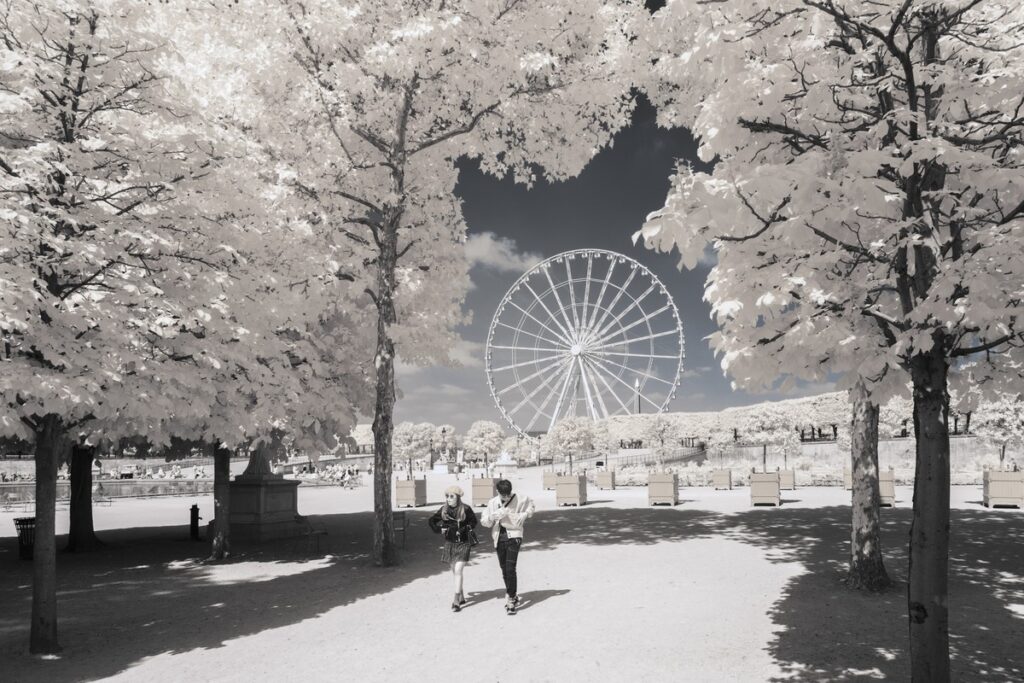
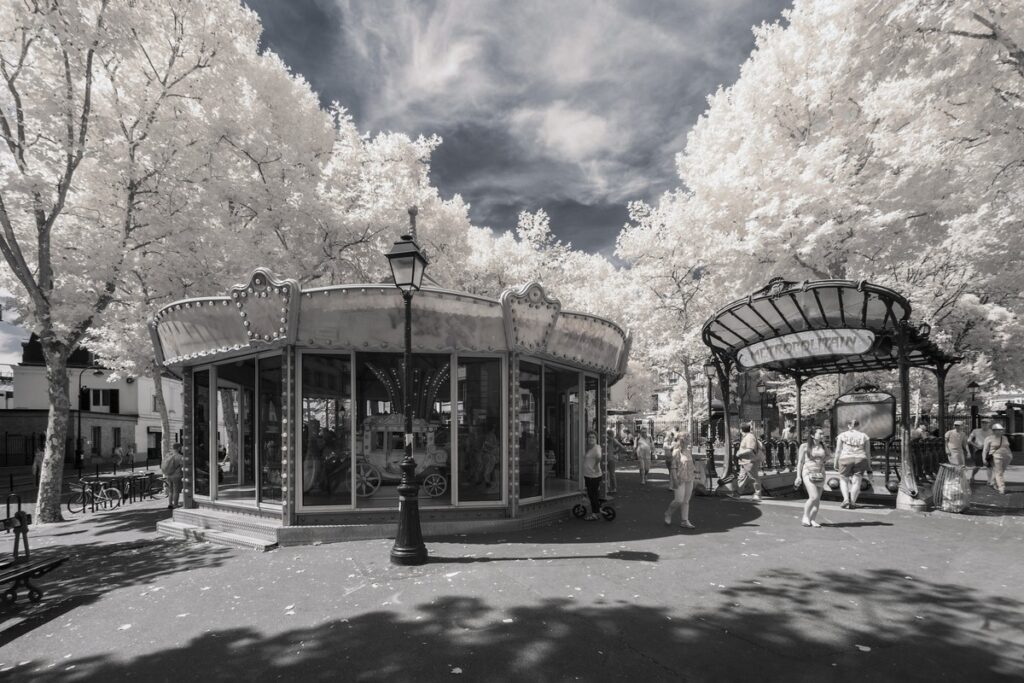
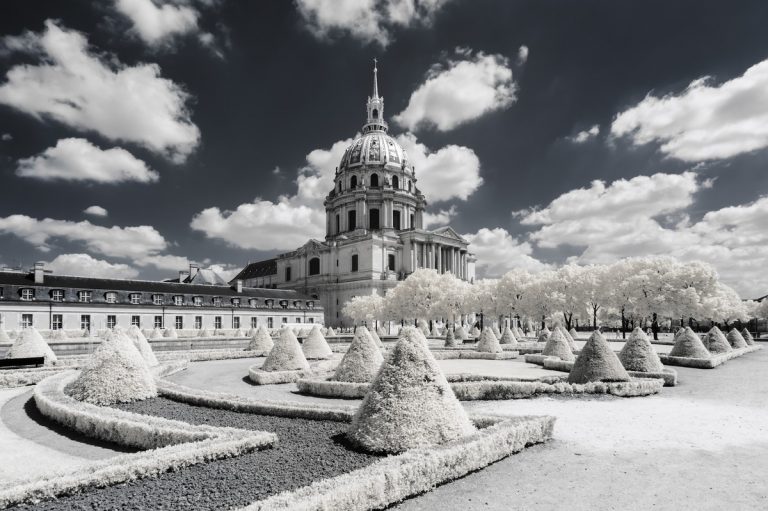
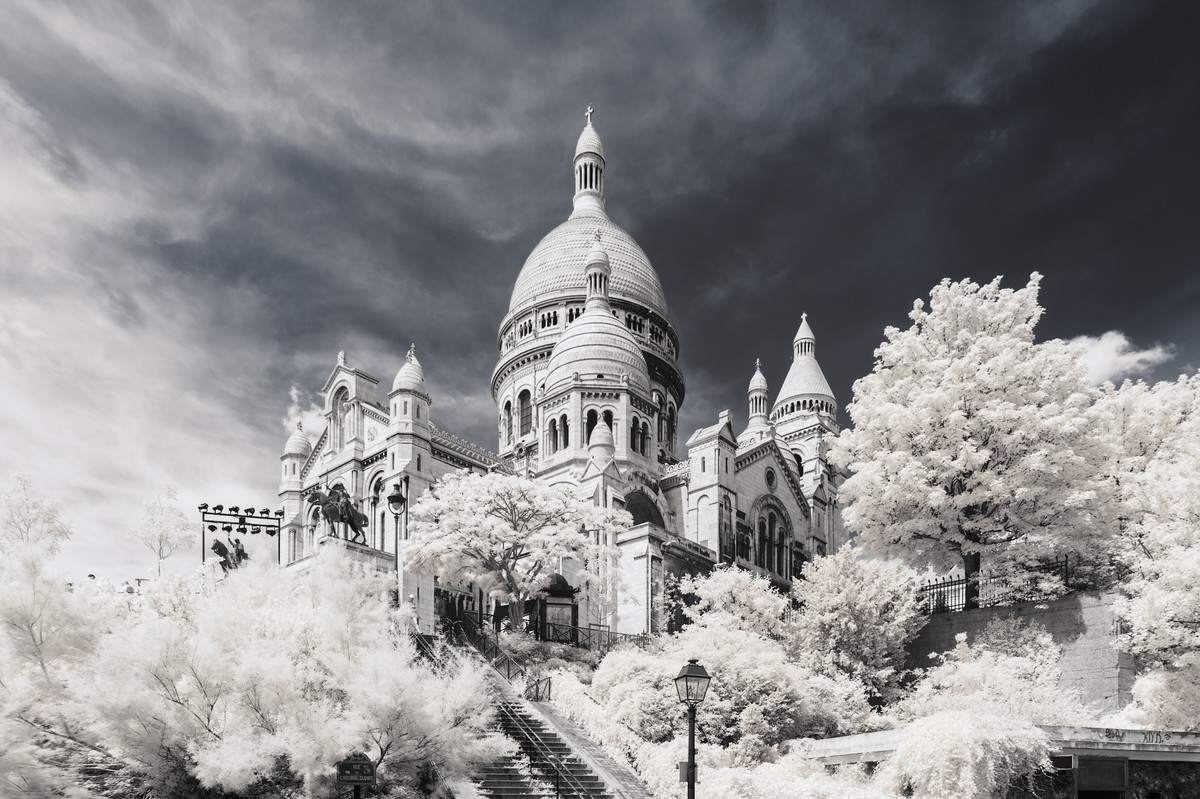
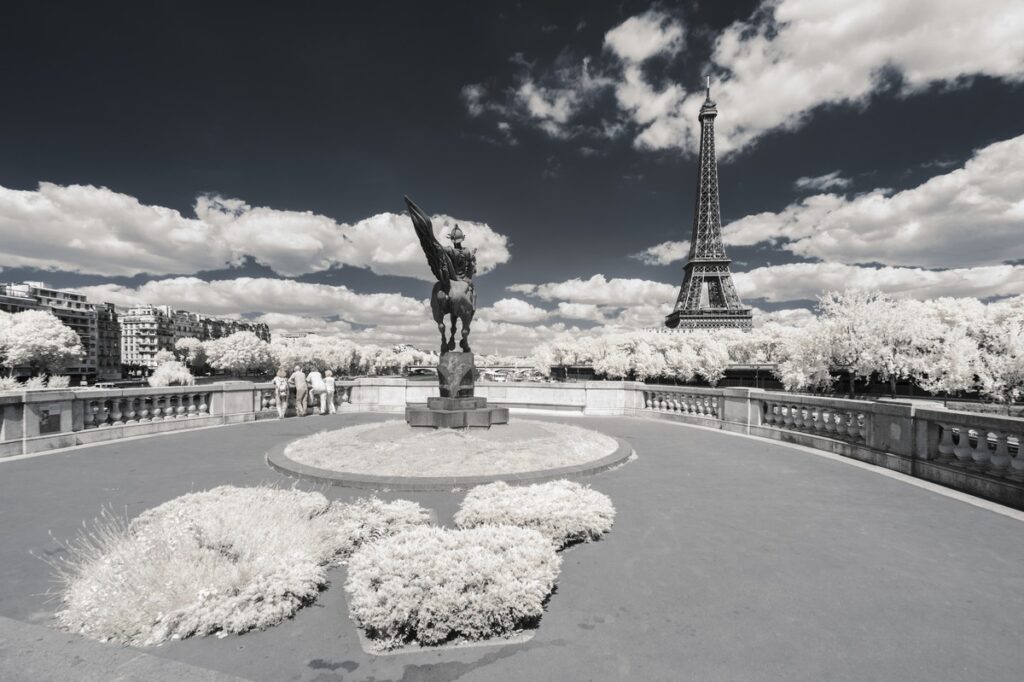
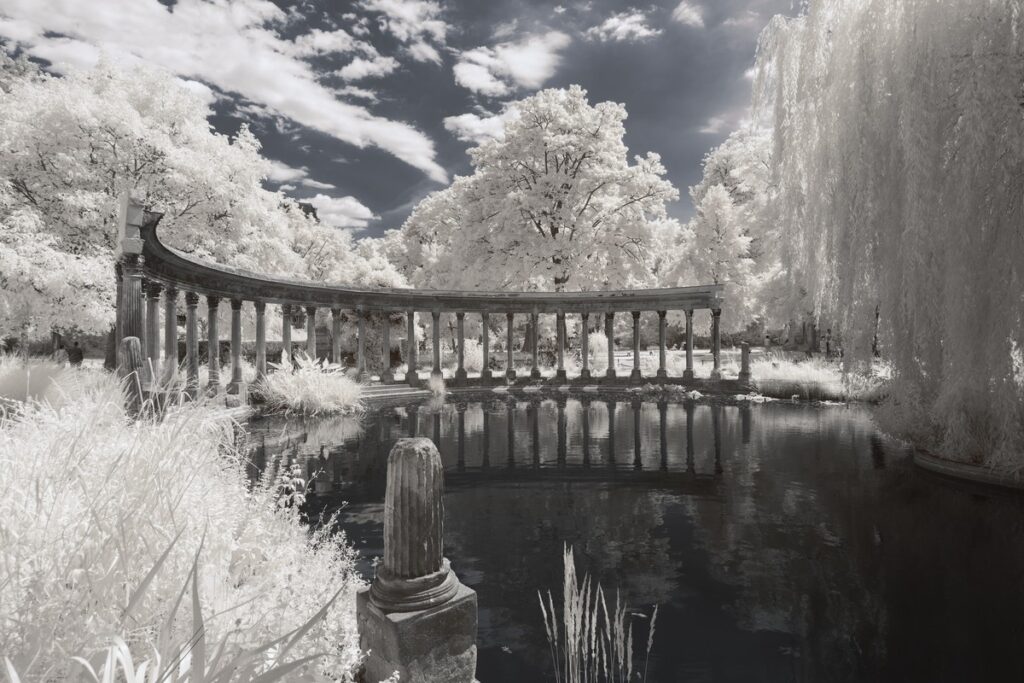
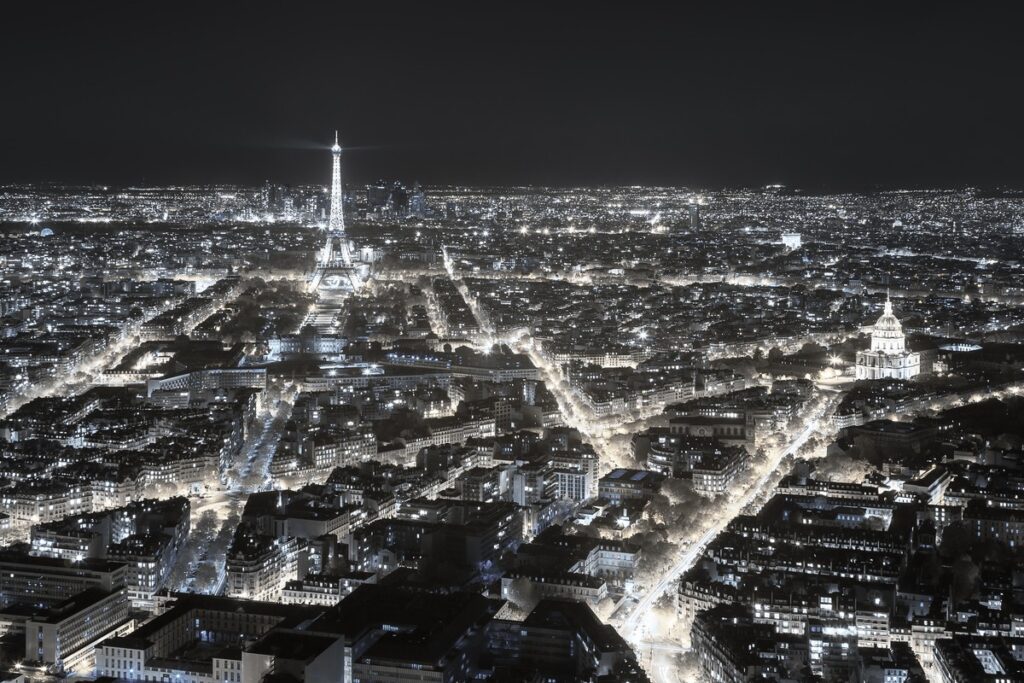
This series presents a selection of Paris’ infrared views, from the most iconic to the most modern. The confrontation between nature and urbanism is at the heart of the narration: the vegetation appears immaculate, surrounding monuments and public spaces in a dreamlike whiteness. In contrast, the buildings, gray and dull, try to focus attention without achieving it. Nature is ubiquitous, pure, as a symbol of escape from the city. The few passers-by scattered here and there accentuate this poetic vision by inviting the viewer to travel through them.
Invisible Paris as Alternative Environment
In the end, this series illustrates one of my main artistic approaches: the revelation of an alternative environment invisible to the naked eye and the invitation to contemplation and reverie.
Invisible Paris Infrared Photography FAQs
What Is Invisible Paris About?
Invisible Paris is an infrared photo essay by Pierre-Louis Ferrer, published on Kolari Vision on February 26, 2019. The series presents Paris through infrared views, from iconic landmarks to more modern urban scenes.
Who Created Invisible Paris?
The page lists Pierre-Louis Ferrer as both the author and featured photographer. The post is categorized under Kolari’s Articles section and presents his infrared interpretation of Paris.
What Is The Main Theme Of Invisible Paris?
The main theme is the confrontation between nature and urbanism. Ferrer describes vegetation as immaculate and dominant, surrounding monuments and public spaces in dreamlike whiteness, while buildings appear gray and dull.
Why Does Infrared Work Well For This Paris Photo Essay?
Infrared makes vegetation visually powerful, turning it into a pure white symbol of escape from the city. That contrast helps the essay reframe Paris as an alternative environment that is invisible to the naked eye.
What Makes Invisible Paris Different From A Standard Paris Travel Gallery?
Instead of focusing only on famous landmarks, Invisible Paris uses infrared to create a poetic city atmosphere. Passers-by, monuments, public spaces, modern areas, and white vegetation work together to invite contemplation and reverie.