2022 LIFE IN ANOTHER LIGHT PHOTO CONTEST WINNERFirst Place - Infrared Photo Essay
Apart from being still alive, if I have to name a single positive thing that happened to me because of the Covid pandemic, I’m naturally thinking about the difficulties of traveling abroad. Being “stuck in Switzerland” but free to circulate has been a blessing as it allowed me to visit natural jewels that many absurdly consider banal or, worse, don’t even notice. I re-discovered my country through the viewfinder of an IR-enabled camera, and this journey brought me lots of joy and memories. I share with you a series of twelve instances I witnessed during the past two years.
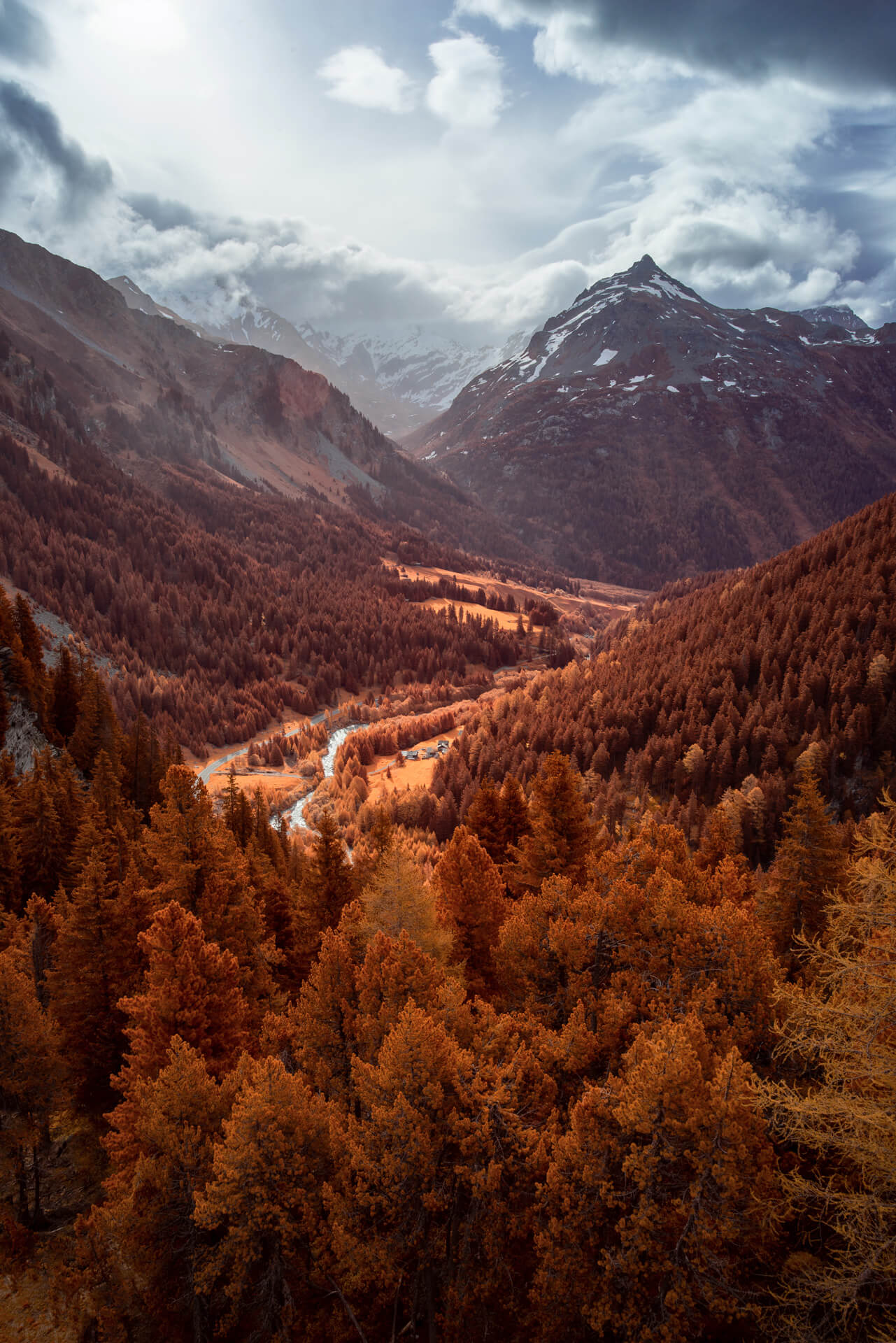
Maloja pass is usually famous for its tight lacelike road linking the high Engadin plateau to the Val Bregaglia, situated a few kilometers from the Italian border. However, light quality was a more captivating subject that day: just before sunlight could pierce through a somewhat tormented sky, a soft light flooded the valley (and the whole dynamic range of my camera) for a few seconds.
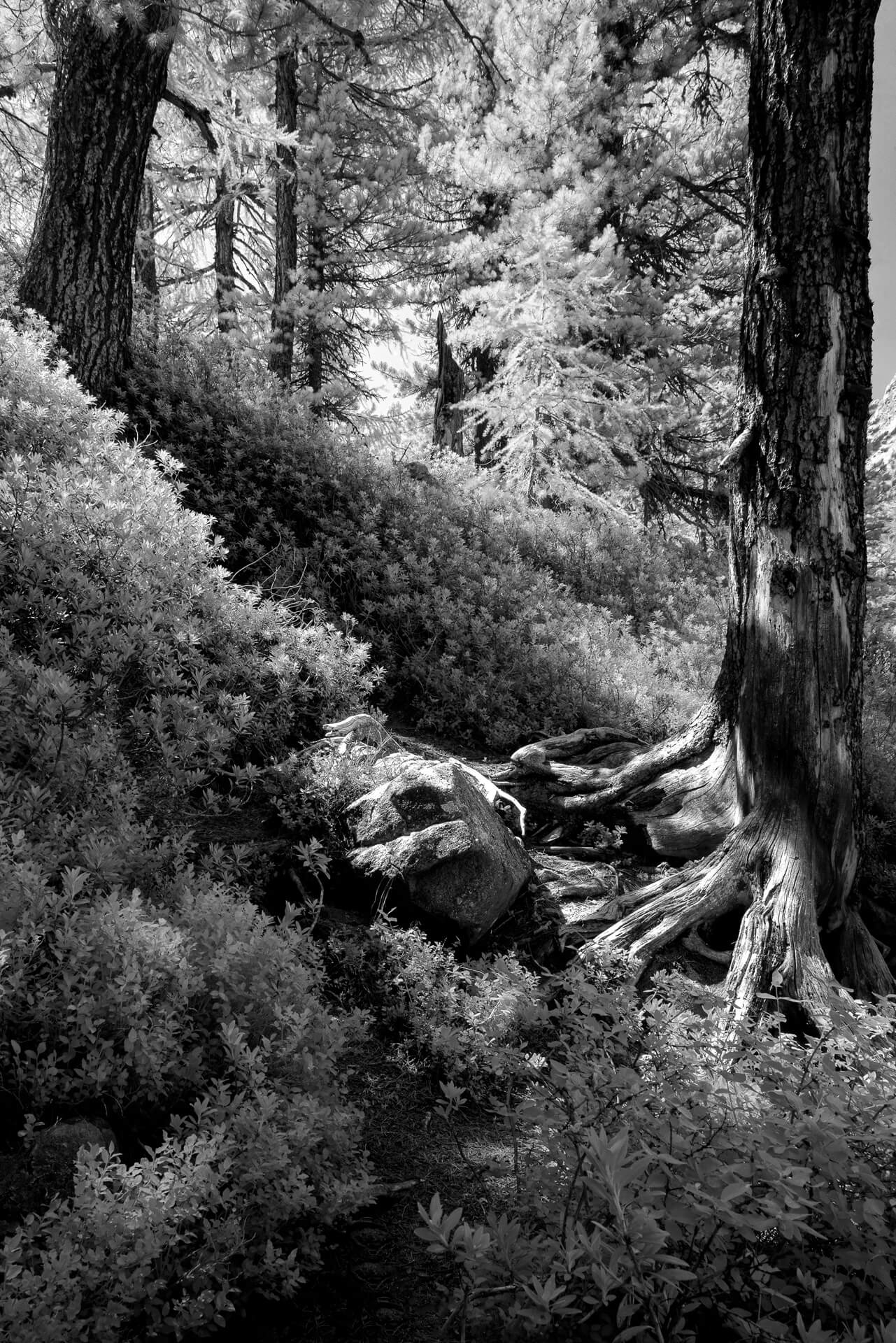
Lake Saoseo is one of the most beautiful lakes I’ve seen. Translucent emerald water and angular rocks are a photographer’s dream. However, I found pleasure in the slopes surrounding the lake, where tortuous roots and lightning-struck trees rub shoulders with fresh bushes. Lateral light partly filtered by trees uphill amazingly increased the scene’s contrast.
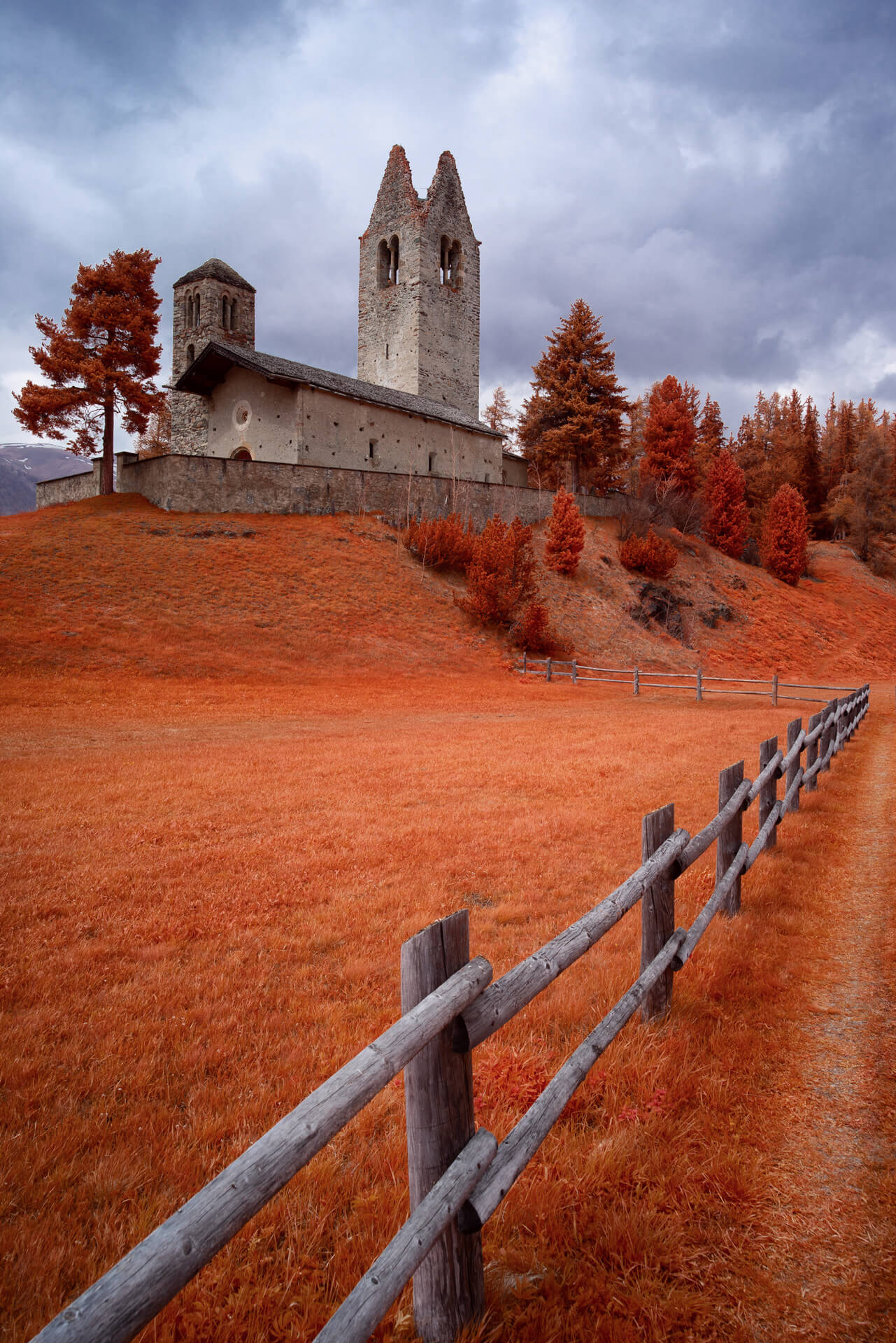
San Gian church in Celerina saw its bell tower struck by lightning in 1682, roughly 200 years after its construction. Ambient electricity is still perceptible hundreds of years later.
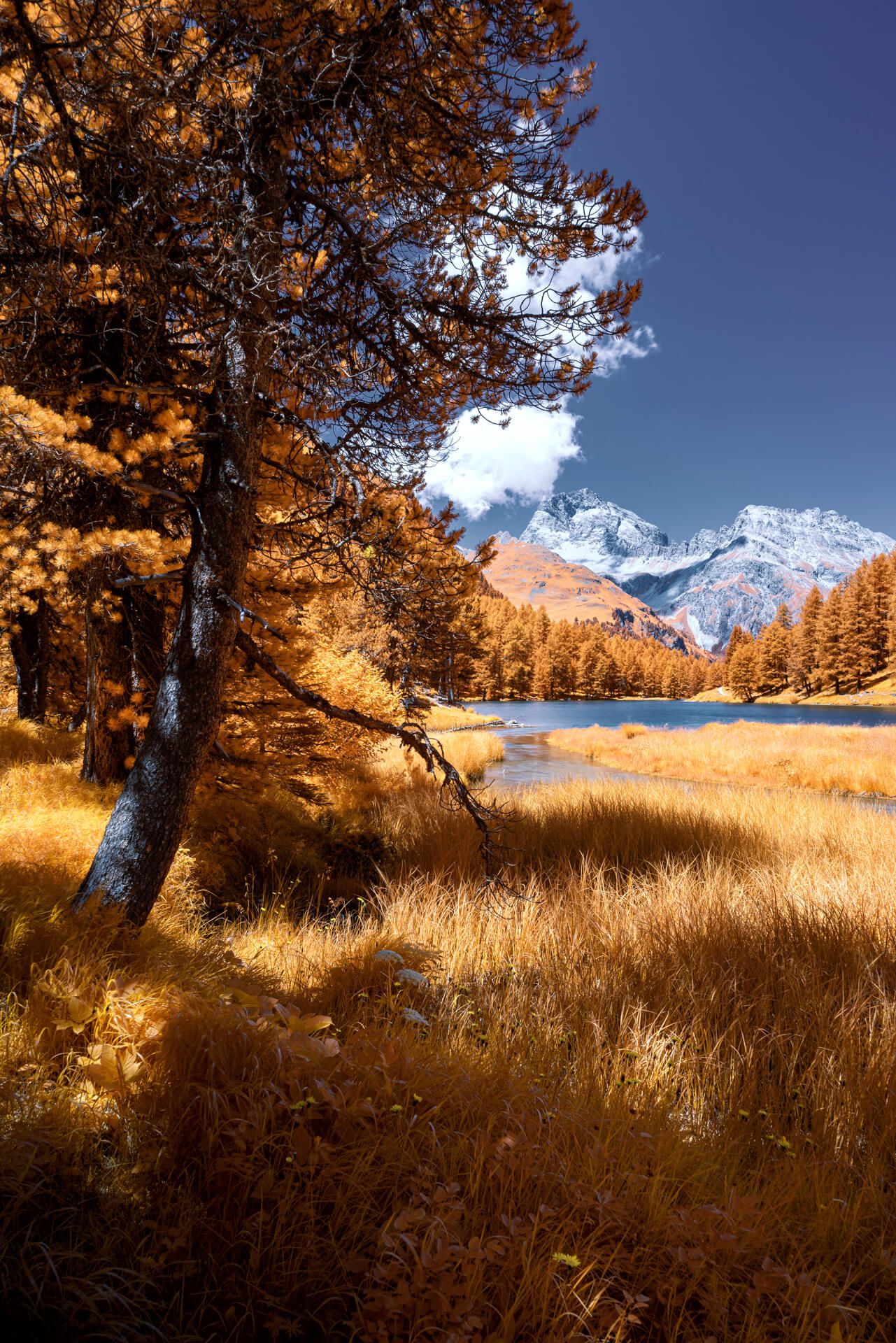
Lake Palpuogna is quietly stretching over the Albula tunnel, one of the highest railroad tunnels of the Alps, and the beginning of a highly complex masterpiece of railway construction, including 55 bridges and 39 tunnels.
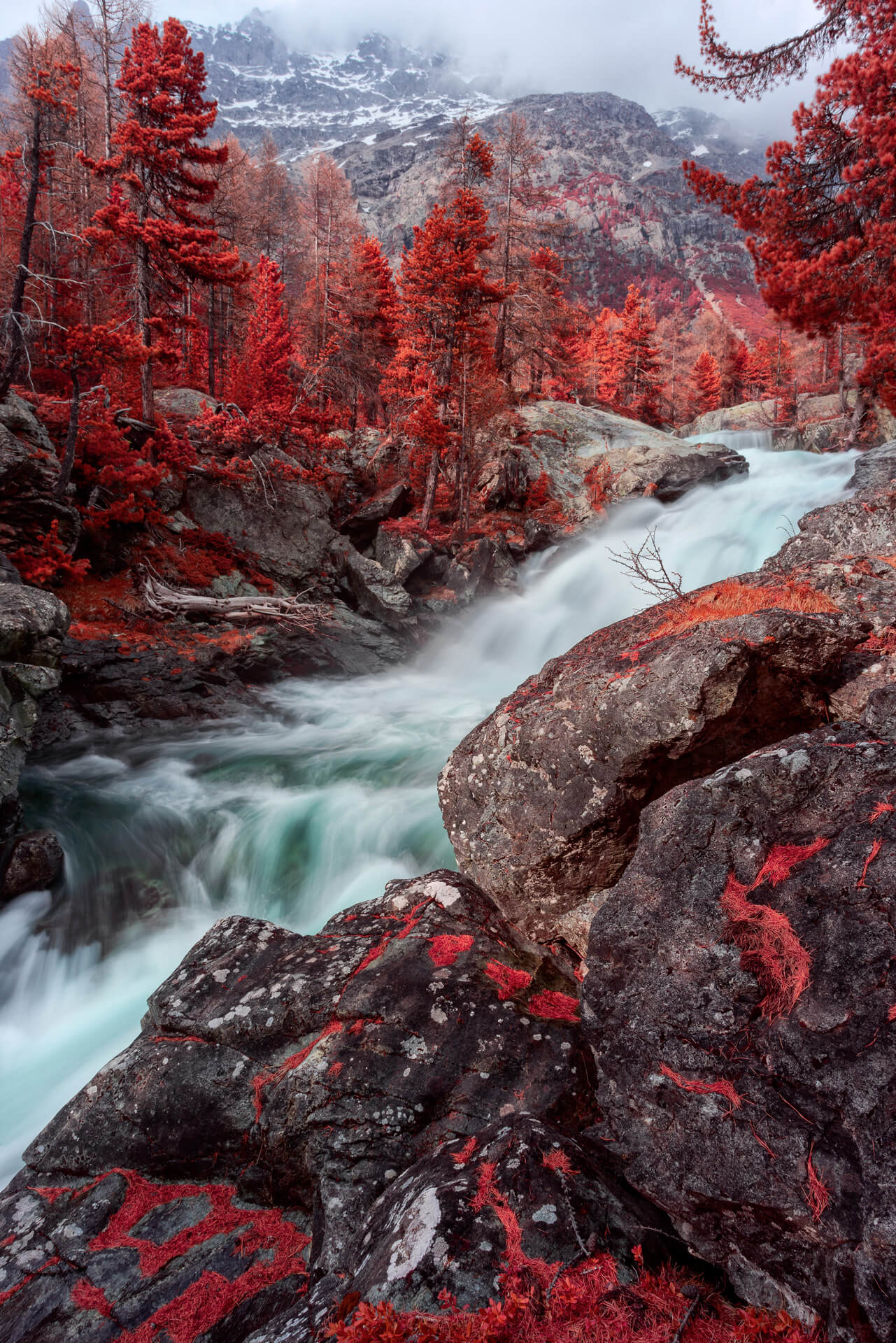
Bernina Falls carry icy waters from Morteratsch Glacier all year long through a cradle of old pines and sculpted rocks. Having been there multiple times during different seasons, I can confirm the difficulty of dealing with this raw beauty’s appeal and its dangerous access!
Evergreen trees such as pines are common at higher altitudes, and their needles remain green because they contain chlorophyll all year long. They are great color IR subjects for this reason, and when visible light decreases after sunset, they allow spectacular deep reds to be appreciated.
When efficiency meets beauty. Landwasser Viaduct is a very impressive component of the lower part of the Albula train line and was built between 1901 and 1903. It was the only solution found by engineers to cross a narrow valley and keep continuity in the train line.
On the border of Bitabergh Lake, a fascinating pine tree has grown partly over a big rock. Despite a peculiar base with complex fused roots, the upper part looks straight and majestic—a beautiful example of adaptation.
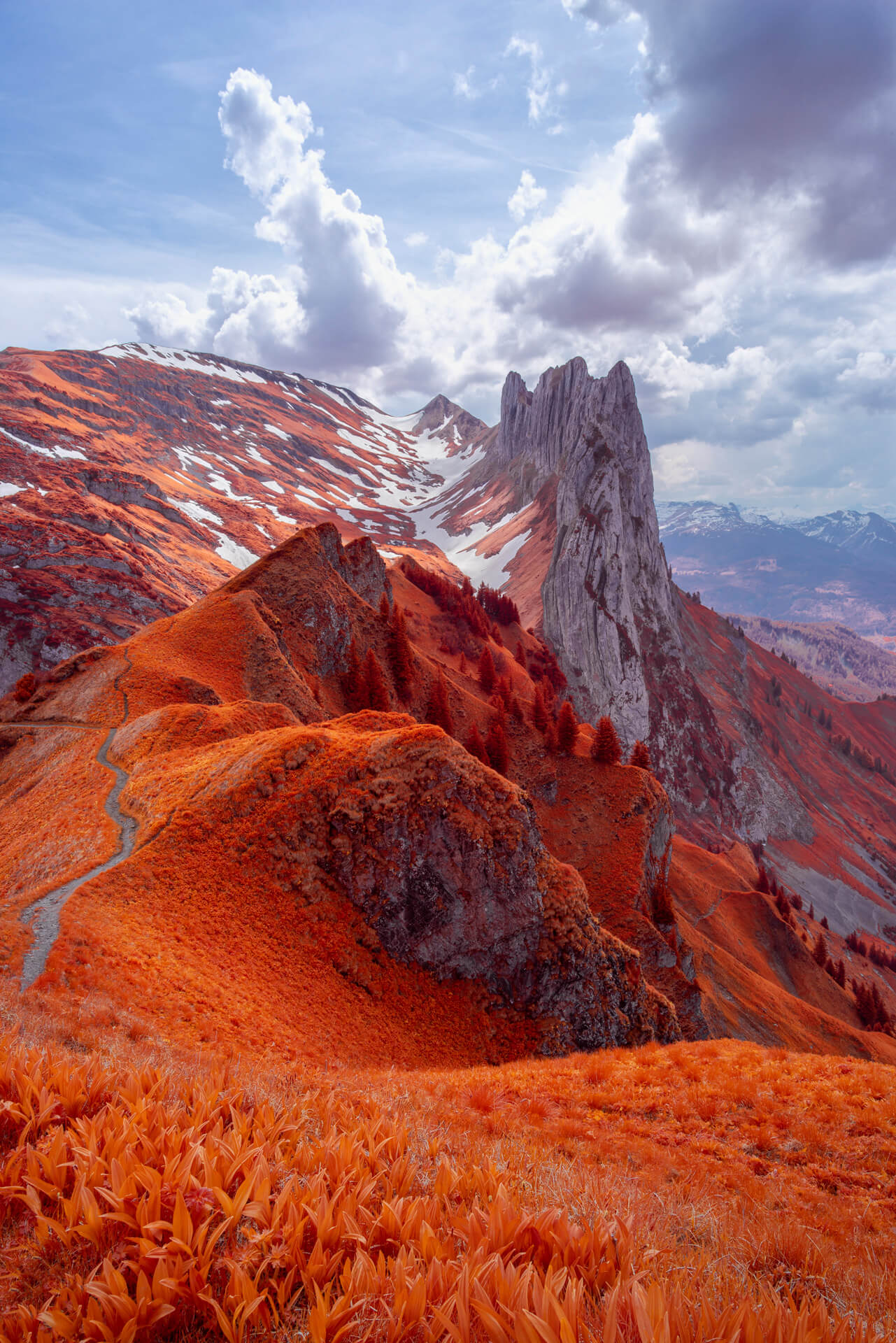
Razor-sharp mountain range surrounded by undulating pastures in Saxer Lücke, close to Appenzell. Sometimes there is a price to pay to witness such an extraordinary spectacle. In the case of this particular visit, it meant running down as thunder and lightning shortly started a somewhat unfriendly show.
I was fighting the elements in Silvaplana again. I found this little castle a bit too Draculesque and thus didn’t seek shelter from the heavy rain.
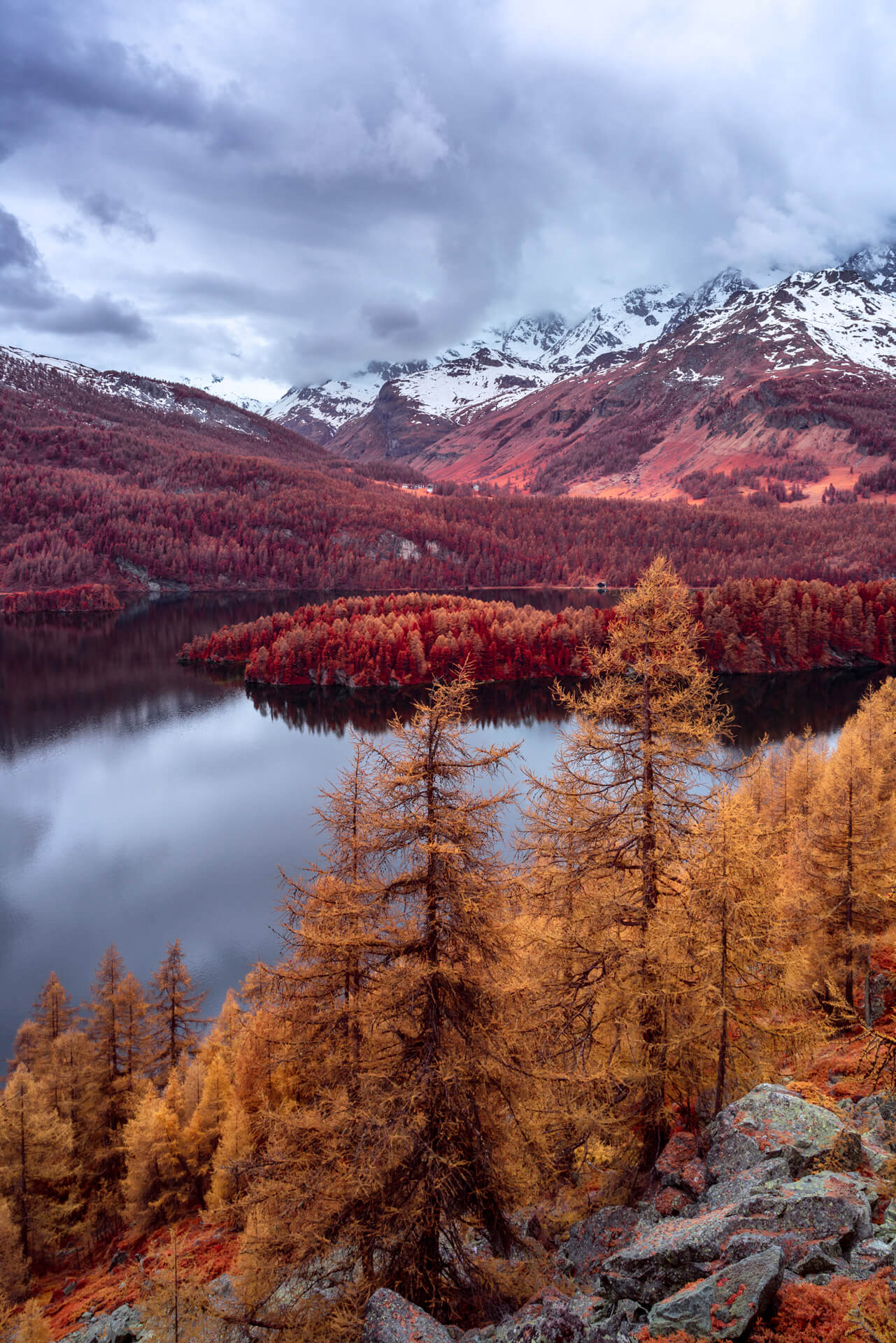
Time seems frozen in this view of Lake Sils. I could easily imagine this happening in an era preceding humanity.
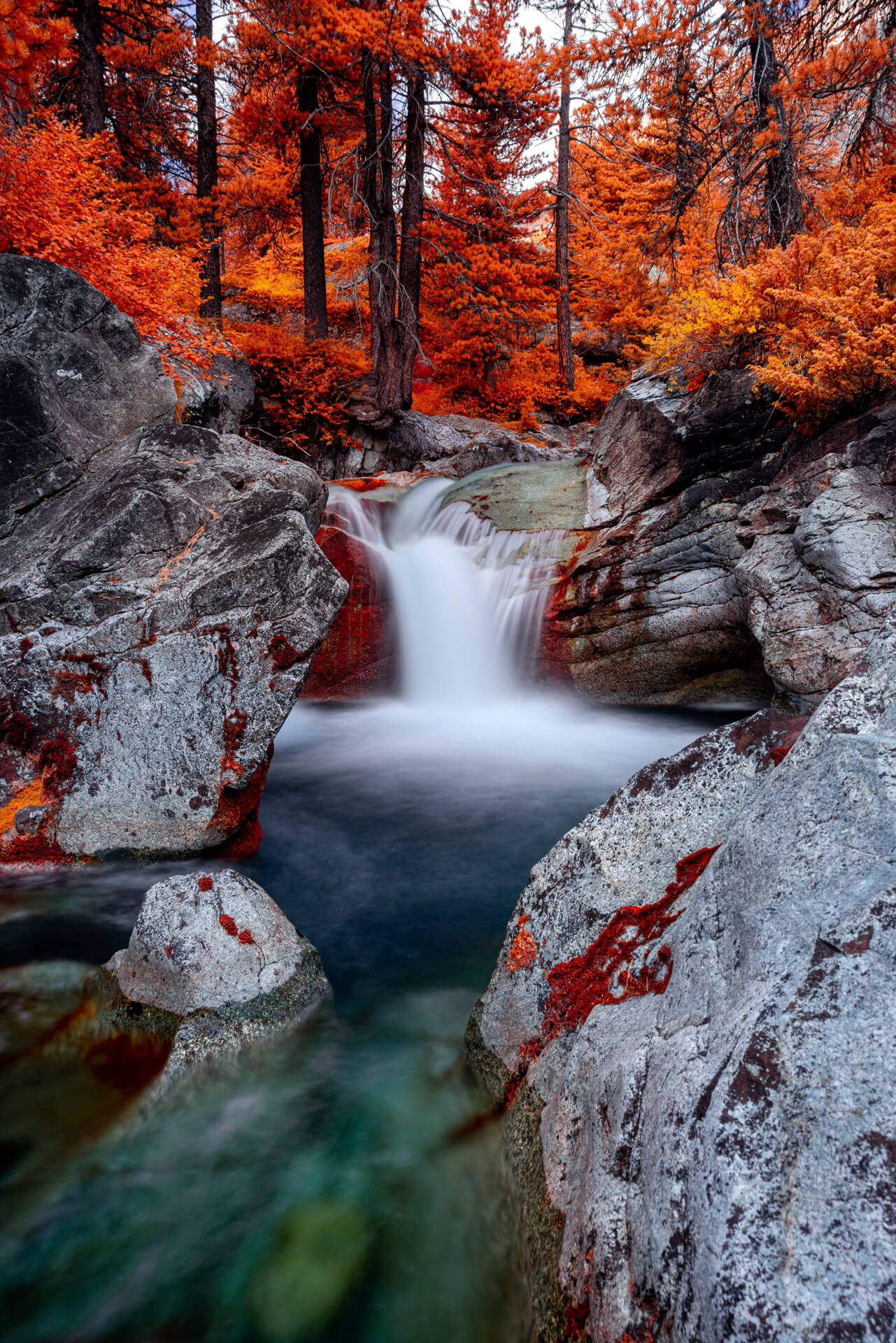
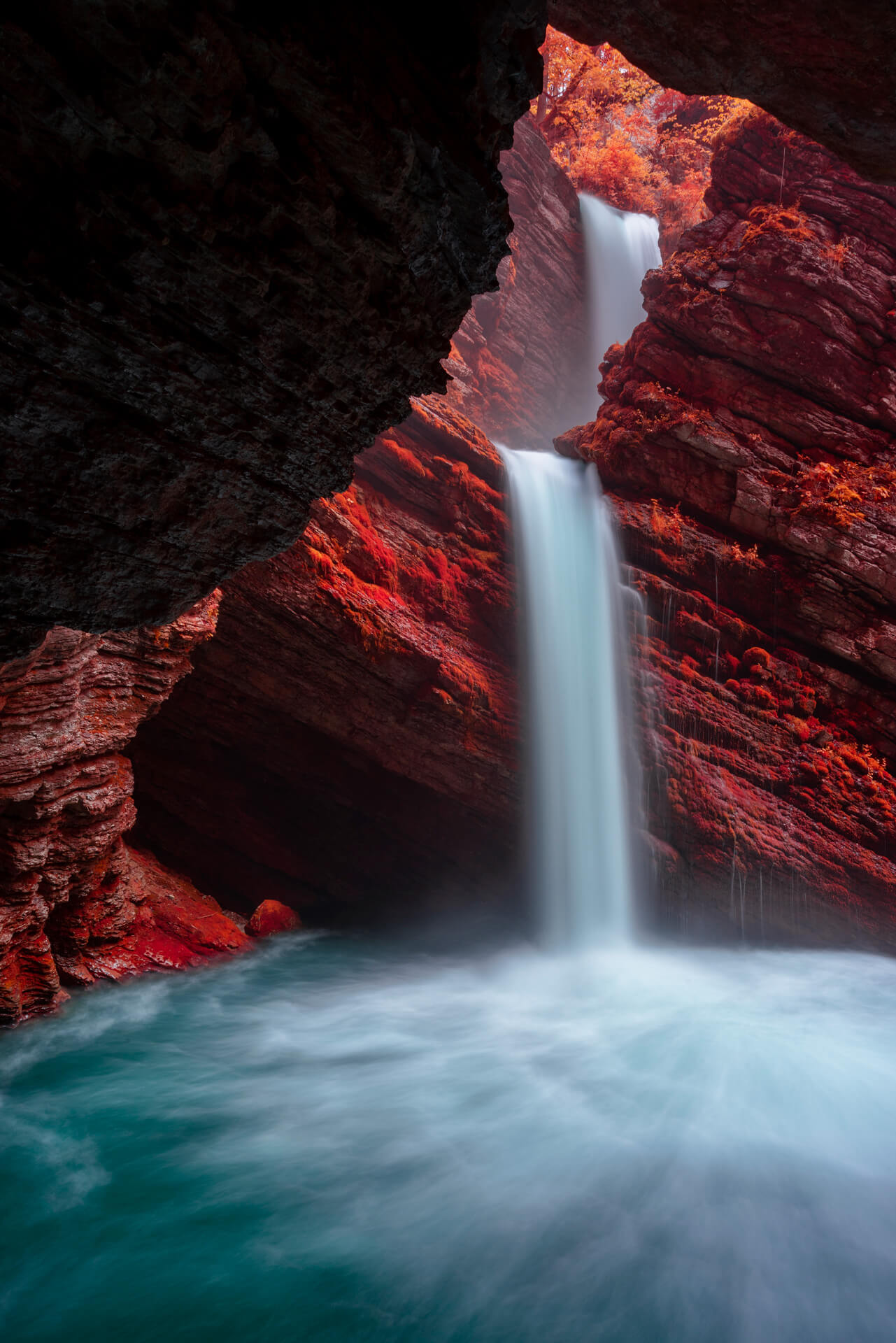
A double waterfall runs through stratified rocks covered by moss in Unterwasser, this time with a shelter and security fence.
Why Infrared Changes How We Understand Landscapes
As a pathologist and amateur photographer, I am naturally interested in imagery. Images represent a mysterious language that can speak to some for no obvious reasons and leaves others totally indifferent. I discovered infrared photography by chance a few years ago while looking for new photography techniques to learn. I was and am still captivated by the idea of perceiving our world using a device that exceeds the limits of my senses. This experience leads to a simple question: how much do we understand the world around us?
Eastern Switzerland Infrared Photography FAQs
What Is Marvels And Wonders Of Eastern Switzerland About?
It is an infrared photo essay by Antoine Nobile about rediscovering natural places in Switzerland through an IR-enabled camera. Kolari lists it as a 2022 Life in Another Light Photo Contest Winner, taking First Place – Infrared Photo Essay.
Why Did Antoine Nobile Photograph Eastern Switzerland In Infrared?
The author says travel restrictions during the Covid period left him “stuck in Switzerland,” but that freedom to move locally became a blessing. It allowed him to revisit Swiss natural landscapes and notice places that many people overlook.
Which Locations Appear In The Eastern Switzerland Photo Essay?
The essay includes locations and subjects such as Maloja Pass, Lake Saoseo, San Gian Church in Celerina, Lake Palpuogna, Bernina Falls, Landwasser Viaduct, Bitabergh Lake, Saxer Lücke, Silvaplana, Lake Sils, and Unterwasser.
Why Are Evergreen Trees Good Subjects For Color Infrared Photography?
The article explains that evergreen trees such as pines contain chlorophyll year-round, making them strong color infrared subjects. When visible light decreases after sunset, those trees can produce deep red IR color effects.
What Is The Main Idea Behind This Infrared Photo Essay?
The essay uses infrared photography to question how much we really understand about the world around us. Nobile connects his interest in imagery as a pathologist and photographer with the idea that infrared lets us perceive the world beyond normal human senses.